Your patio door lock won’t latch, the key sticks, or the handle wobbles—frustrating issues that compromise both security and convenience. These problems are common, especially on sliding glass doors that endure daily use and exposure to weather. The good news? Most of these issues aren’t signs of a major failure. In fact, many can be diagnosed and fixed with simple tools and a few minutes of attention.
This guide walks you through identifying the root cause—whether it’s misalignment, worn components, corrosion, or a loose handle—and offers practical, step-by-step solutions. You’ll learn how to inspect the lock and strike plate, clean and lubricate the mechanism, adjust the door’s alignment, and when to replace parts. By understanding how the system works, you’ll not only fix the current problem but also prevent future failures with routine maintenance.
Understanding Common Patio Door Lock Problems
Patio door locks endure constant use and exposure to weather, making them prone to wear and malfunction over time. What starts as a minor inconvenience—like a stiff key or a loose handle—can quickly escalate into a security risk if ignored. The good news is that most issues stem from identifiable causes like dirt buildup, corrosion, or misalignment, rather than complete hardware failure. Early detection and simple fixes can prevent more costly repairs down the line.

Why Patio Door Locks Develop Problems
Sliding patio doors rely on a precise system of interlocking components: the lock mechanism, rollers, track, strike plate, and handle. When any one part wears, shifts, or becomes obstructed, the entire system can fail. Daily operation, combined with exposure to humidity, rain, and temperature changes, accelerates wear. Over time, this leads to:
- Wear and tear on internal lock components, especially the latch and cylinder.
- Misalignment caused by shifting door frames or worn rollers.
- Corrosion from moisture, particularly in metal parts like the strike plate or lock body.
- Debris accumulation in the track or lock cylinder, leading to sticking or jamming.
- Loose hardware, such as screws securing the lock or handle, which affects alignment and function.
These issues often develop gradually, making routine inspection essential.
Signs That Your Lock Needs Attention
Pay attention to these early warning signs to avoid a complete lock failure:
- Difficulty turning the key or operating the thumb turn, indicating internal debris or wear.
- The door won’t latch or lock securely, even when the handle is turned.
- Visible misalignment—the door doesn’t close flush with the frame, or gaps appear along the edges.
- A loose or wobbling handle, which can disrupt the lock’s ability to engage.
- Sticking or jamming when sliding the door, especially if the lock mechanism feels obstructed.
- Rust or corrosion on metal parts, particularly around the strike plate or lock cylinder.
Addressing these symptoms early can prevent further damage and maintain your home’s security.
Step-by-Step Guide to Diagnosing the Issue
Before attempting any repair, it’s essential to systematically identify the root cause of your patio door lock issue. Many problems stem from simple misalignments or debris rather than broken components. A careful inspection saves time and prevents unnecessary part replacements.
Start with a Visual and Functional Inspection
Begin by observing how the door operates. Slide the door fully open and closed while watching the lock mechanism. Note if it moves smoothly or feels stiff.
Check for uneven movement, binding, or resistance. Look for visible signs of wear on the lock body, handle, strike plate, and rollers. Inspect the track for dirt, debris, or obstructions. A loose handle or wobbling lock can indicate loose screws or internal damage.
- The door should slide without catching or dragging.
- The handle should not wobble or feel unstable when turned.
- The strike plate should be flush with the frame and free of dents or warping.
- Rollers should be intact and not visibly flattened or cracked.
Check for Misalignment and Wear
Misalignment is one of the most common causes of lock failure. If the door doesn’t close flush with the frame, the latch may not engage properly. Test the lock by attempting to engage and disengage it. If it sticks, feels stiff, or fails to latch, the issue is likely mechanical or alignment-related.
- Close the door and observe the gap between the door and frame. If it’s uneven, the door may be out of alignment.
- Check if the latch extends fully into the strike plate. If it doesn’t, the strike plate may be misaligned or the latch is worn.
- If the door appears lower than normal, worn rollers are likely the cause. This shifts the door’s position and prevents proper lock engagement.
- Inspect the strike plate for wear or bending. A damaged strike plate can prevent the latch from catching securely.
- Test the handle for looseness. Tighten any visible screws. If the handle still wobbles, the internal mounting may be compromised.
A misaligned door or worn components can prevent even a fully functional lock from working correctly. Addressing alignment first ensures that repairs are effective and long-lasting.
Fixing a Lock That Won’t Latch
A patio door lock that won’t latch is a common frustration, often stemming from misalignment or worn components. Before replacing parts, diagnose and address the root cause to restore secure operation.

Inspect the Latch and Strike Plate Alignment
Begin by checking the physical alignment between the latch and the strike plate. Close the door and observe whether the latch extends fully into the strike plate. If it doesn’t, the components are likely misaligned.
- Look for gaps between the door and frame when closed—uneven gaps suggest misalignment.
- Check if the strike plate is bent, loose, or recessed too deeply into the frame.
- Ensure the latch extends fully when the handle is turned. If it stops short, the strike plate may be out of position.
- If the door sits lower than normal, worn rollers are likely shifting the door’s position and preventing proper engagement.
Adjust or Replace Worn Components
Once alignment is confirmed, take corrective action based on your findings.
- Loosen the screws on the strike plate using a screwdriver.
- Gently reposition the plate so the latch can engage fully, then retighten the screws.
- If the strike plate is damaged or bent, replace it with a compatible model.
- If the latch itself doesn’t extend fully, the lock mechanism may be worn and should be replaced.
- If rollers are cracked, flattened, or show signs of wear, replace them to restore proper door alignment and reduce stress on the lock.
Replacing worn rollers often resolves latch issues by ensuring the door sits correctly in the frame. Always use compatible replacement parts to maintain functionality and security.
Addressing a Stuck or Difficult-to-Turn Lock
When the key won’t turn smoothly or the thumb turn feels stiff, the internal lock mechanism is likely compromised. This issue often stems from accumulated debris, corrosion, or internal wear. Addressing it promptly prevents further damage and maintains your door’s security.
Clean and Lubricate the Lock Mechanism
Begin by removing dirt and grime that can restrict movement. Use a can of compressed air to blow out dust, lint, and debris from the keyhole and surrounding areas. Focus on the lock cylinder and the internal components visible through the keyway.
- Gently insert the nozzle of the compressed air can into the keyhole and spray in short bursts.
- Tilt the door slightly to allow debris to fall out.
- Avoid using excessive force or liquid cleaners, which can damage internal parts.
After cleaning, apply a lock-safe lubricant to reduce friction. Use graphite powder or a silicone-based lubricant—both are ideal because they don’t attract dust or degrade over time.
- Apply a small amount of lubricant directly into the keyhole.
- Work the key back and forth several times to distribute the lubricant through the mechanism.
- Wipe off any excess to prevent buildup.
Avoid oil-based lubricants like WD-40, as they can attract dirt and lead to future sticking.
Assess Internal Wear and Failure
If cleaning and lubrication don’t resolve the stiffness, internal components may be worn or damaged. Inspect the lock cylinder and mortise lock for signs of failure.
- Turn the key slowly and note any resistance, grinding, or partial engagement.
- If the key turns but the latch doesn’t move, the internal linkage may be broken.
- If the key won’t insert fully or jams, the cylinder may be internally damaged.
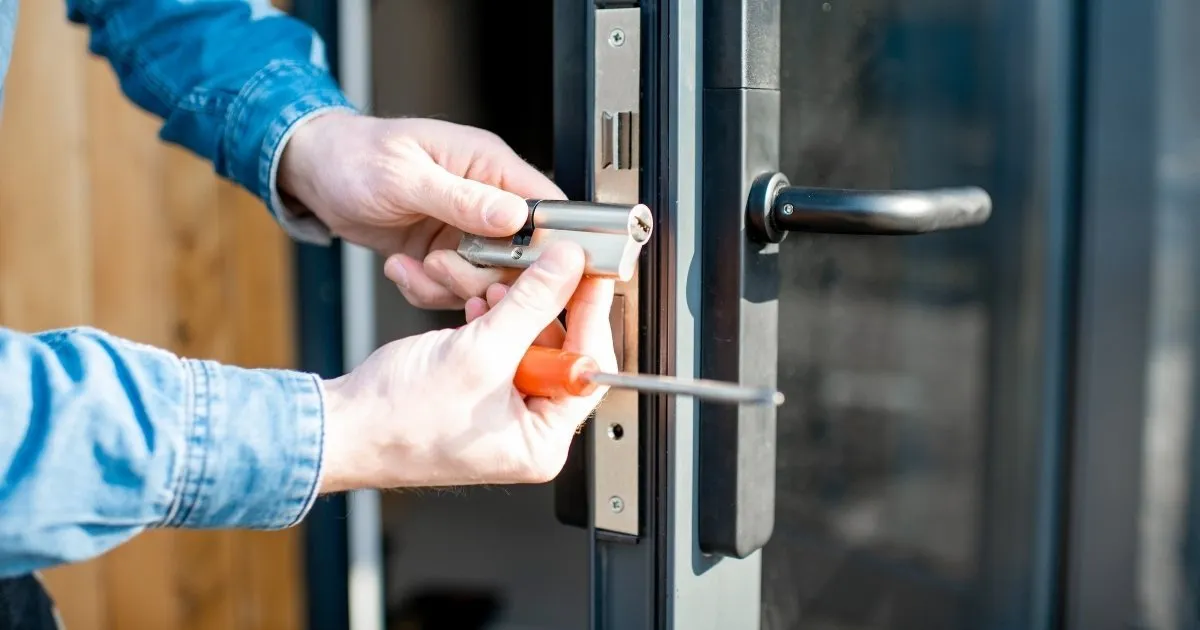
In such cases, the lock cylinder or the entire mortise lock may need replacement. These components are not universal—ensure any replacement matches your door’s brand, model, and dimensions. Replacing the lock cylinder is often more affordable than replacing the full handle assembly. If the lock is old, corroded, or shows signs of repeated failure, upgrading to a new, compatible lock improves both function and security.
Handling a Loose or Wobbly Handle
A loose or wobbly handle may seem minor, but it can compromise your patio door’s security and lock performance over time. When the handle isn’t securely attached, it can misalign the internal locking mechanism, preventing the latch from engaging fully. Most sliding glass door handles are secured with just two screws—often located on the interior side of the door. Addressing this issue early prevents further wear and potential lock failure.
Tighten or Replace Loose Screws
Start by inspecting the screws that hold the handle in place. Use a screwdriver to tighten them firmly. If the screws are stripped or no longer grip the wood or metal, they won’t hold effectively.
- Try a slightly larger screw if the original size is damaged.
- Use a screwdriver that matches the screw head (Phillips, flathead, etc.) to avoid further stripping.
- If the screw hole is enlarged, insert a small piece of wood matchstick or toothpick into the hole before re-screwing. This fills the gap and improves grip.
This simple fix resolves the issue in most cases and restores stability to the handle.
Replace the Handle Assembly if Necessary
If tightening the screws—or even replacing them—doesn’t stop the wobble, the handle assembly itself may be damaged or worn. In such cases, replacing the entire handle is often the most reliable long-term solution.
- Remove the old handle by unscrewing it from the door.
- Match the new handle to your door’s brand, model, and latch type for proper fit.
- Ensure the replacement includes all necessary hardware (screws, spindles, etc.).
- Install the new handle and test the lock operation.
Replacing the handle ensures consistent alignment and secure lock engagement, restoring both function and peace of mind.
When to Replace the Lock or Hardware
Identifying When Replacement Is Necessary
When repair efforts fail to restore proper function, replacement becomes necessary. If the lock mechanism is worn, damaged, or internally broken—such as a key that won’t turn or a latch that no longer extends fully—repair is often insufficient. Persistent issues like a stuck lock, corroded components, or a loose handle that won’t stay secure despite tightening screws indicate deeper problems. Even if the lock appears intact, internal wear from years of use can compromise security. If the door still moves excessively after locking, the lock may be engaging, but the hardware is no longer providing a secure seal.
- A worn latch will not catch properly, leaving the door vulnerable.
- Internal damage to the lock cylinder or mortise lock may require full replacement.
- Severe corrosion or rust on metal components can compromise structural integrity.
- If the lock fails to engage even after cleaning, lubrication, and alignment, replacement is likely needed.
Choosing Compatible Replacement Components
Sliding door locks are not universal and vary significantly by manufacturer, door style, dimensions, screw spacing, backset, and latch configuration. Even two locks that appear identical may not be interchangeable due to subtle differences in internal mechanisms or mounting. Always verify compatibility before purchasing. Replacing the mortise lock is often more affordable than replacing the entire handle assembly, but the new lock must match your door’s specifications exactly.
- Measure the backset, latch type, and screw hole spacing before buying.
- Match the lock to your door’s brand and model for proper fit.
- Use high-quality components to ensure durability and improved security.
- Consider upgrading to a multipoint lock or reinforced design for better performance.
Choosing compatible, high-quality replacement hardware restores smooth operation and enhances home security.
Preventing Future Patio Door Lock Problems
Routine Maintenance for Long-Term Functionality
Regular upkeep significantly extends the life of patio door hardware and prevents many common issues. Taking just a few minutes each year can save time, money, and frustration later. Begin by cleaning the entire track thoroughly—dirt, dust, and debris can accumulate and interfere with smooth operation.
Use a soft brush or vacuum to remove buildup from the track and rollers. Inspect the rollers for signs of wear, such as flattening or cracking. Worn rollers can cause the door to sit unevenly, leading to misalignment and lock failure. Replacing them early restores smooth movement and reduces stress on the locking mechanism.
- Clean the track and rollers with a dry brush or compressed air.
- Check rollers for wear, flattening, or damage.
- Replace rollers if they show visible signs of deterioration.
- Lubricate moving parts with a silicone-based or graphite powder lubricant—avoid oil-based products that attract dirt.
Protecting Hardware from Environmental Damage
Patio doors are constantly exposed to humidity, rain, and changing weather conditions, which can lead to corrosion over time. Even minor corrosion affects both appearance and function, causing stiffness or failure in the lock mechanism. If corrosion is caught early, cleaning the affected areas with a soft cloth and a mild solution, followed by lubrication, may restore function.
However, for severe rust or pitting, replacing the affected components is the safest and most effective solution. Regular cleaning and protection help maintain the integrity of metal parts and ensure reliable performance.
- Clean hardware annually to remove moisture and debris.
- Apply a rust-inhibiting coating to exposed metal parts if needed.
- Avoid harsh chemicals that can damage finishes or seals.
- Address minor corrosion immediately to prevent progression.
Conclusion
A malfunctioning patio door lock doesn’t have to mean a costly replacement or professional service. Most common issues—misalignment, sticking mechanisms, loose handles, or worn components—can be diagnosed and resolved with simple tools and a bit of care. Start by inspecting the lock, strike plate, rollers, and hardware for wear or debris, then clean, lubricate, or adjust as needed. If repairs don’t restore function, replacing the lock or handle with a compatible, high-quality part ensures reliable performance and improved security.
The key takeaway is to act early. Routine maintenance—cleaning the track, checking rollers, and lubricating moving parts—can prevent minor issues from becoming major problems. If you’re unsure about compatibility or the repair process, consult a professional to avoid further damage. Addressing the issue promptly protects your home’s safety and preserves the smooth, seamless operation that sliding doors are designed for.
FAQ
What causes a patio door lock to stop latching?
A patio door lock typically fails to latch due to misalignment between the latch and strike plate. This can happen if the door is out of position, often caused by worn rollers or a shifting frame. A worn or damaged latch may not extend fully, while a bent or loose strike plate can prevent proper engagement. Dirt or debris in the track can also interfere with smooth door movement, leading to misalignment.
Can I fix a stuck patio door lock myself?
Yes, many stuck locks can be fixed at home. Start by cleaning the lock mechanism with compressed air to remove debris. Then apply a lock-safe lubricant like graphite powder or silicone spray to reduce friction. If the key still won’t turn, the internal cylinder may be damaged and require replacement. Simple fixes like lubrication and cleaning resolve most sticking issues without professional help.
Are all sliding door locks interchangeable?
No, sliding door locks are not interchangeable. They vary by manufacturer, door style, dimensions, screw spacing, backset, and latch configuration. Even locks that look similar may not fit due to subtle differences in internal components or mounting. Always verify compatibility with your door’s brand and model before purchasing a replacement to ensure proper fit and function.
How often should I maintain my patio door lock?
Perform routine maintenance at least once a year. Clean the track and rollers to remove dirt and debris, inspect for wear, and replace worn rollers if needed. Lubricate the lock mechanism with a silicone-based or graphite powder lubricant to keep it operating smoothly. Regular checks help prevent misalignment, sticking, and corrosion, extending the life of your hardware.
When should I replace the entire lock assembly?
Replace the entire lock assembly if the lock is severely worn, corroded, or damaged beyond repair. Persistent issues like a key that won’t turn, a latch that won’t extend, or a loose handle that won’t stay secure despite tightening screws are signs of deeper failure. If cleaning, lubricating, and adjusting don’t resolve the problem, or if the lock no longer provides adequate security, a full replacement is the safest solution.
What type of lubricant should I use on my patio door lock?
Use a dry lubricant like graphite powder or a silicone-based spray. These are ideal because they don’t attract dust or dirt, which can cause future sticking. Avoid oil-based lubricants like WD-40, as they can attract debris and degrade over time. Apply a small amount into the keyhole and work the key back and forth to distribute the lubricant evenly.