Vending machine lock types are more than just a mechanical detail—they’re a critical line of defense in protecting your investment, inventory, and revenue. When machines are placed in public or unattended locations, they become prime targets for theft and tampering. A weak or poorly chosen lock can mean the difference between a secure operation and a costly security breach. The right cylinder lock ensures only authorized personnel can access cash, products, and sensitive components, reducing risk and downtime.
This guide breaks down the most common vending machine lock types—tubular, flat, and screw locks—explaining their design, security strengths, and real-world applications. You’ll learn how materials like zinc alloy, steel, and stainless steel affect durability, what security features to prioritize, and how to match a lock to your machine’s design and environment. We’ll also cover proper installation, maintenance best practices, and how standardized systems support fleet management. By the end, you’ll know how to select, install, and maintain a lock that keeps your machines secure and operational.
The Role of Cylinder Locks in Vending Machine Security
Why Vending Machines Need Specialized Locks
Vending machines are often placed in unattended or semi-public areas, exposing them to:
- High foot traffic
- Unpredictable access
- Increased risk of theft and tampering
Their contents—cash, electronics, and perishable goods—pose significant financial and operational risks.
Standard household locks are not suitable for this environment. Vending machine cylinder locks are specifically designed to handle:
- Forced entry attempts
- Harsh environmental conditions
- Frequent use over time
These locks prioritize:
– Durability
– Resistance to picking and drilling
– Secure, controlled access
Only authorized personnel should be able to access the machine’s interior.
The Critical First Line of Defense
Cylinder locks serve as the primary barrier protecting key components:
- Cash compartments
- Product dispensing mechanisms
- Sensitive electronic systems
When properly installed and maintained, a high-quality cylinder lock ensures:
1. Only individuals with the correct key can open the machine
2. Unauthorized access is prevented
3. Revenue and equipment integrity are preserved
This controlled access supports:
– Operational reliability
– Financial accountability
– Secure, trackable service visits
Without a robust cylinder lock, even advanced vending machines are vulnerable to:
– Tampering
– Inventory loss
– Revenue leakage
– Costly repairs
The lock’s role extends beyond physical security—it enables efficient, secure operations for technicians, service staff, and managers.
Common Types of Vending Machine Locks and Their Key Features
The Most Common Type
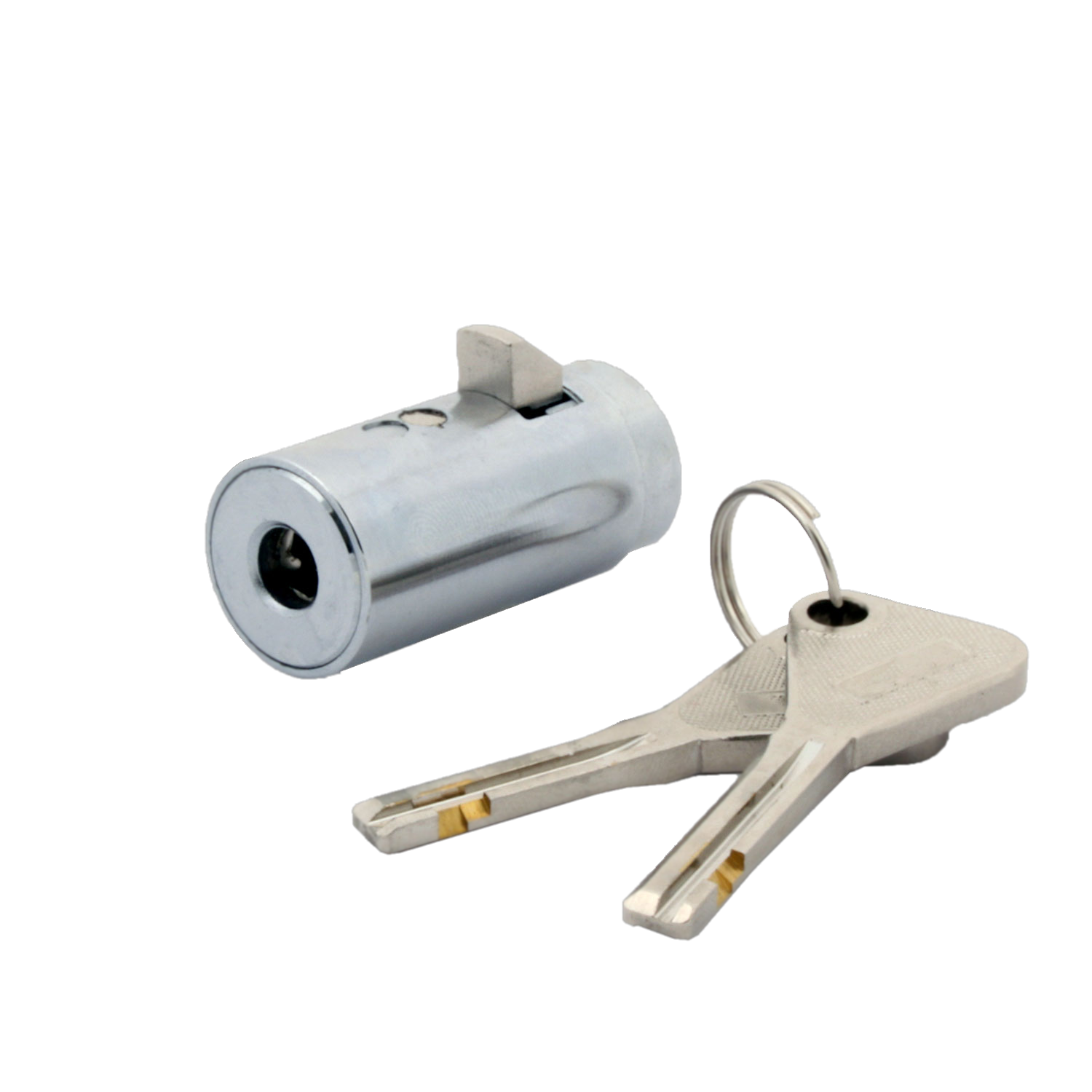
The most frequently encountered lock type in vending machines is the tubular lock, also known as a barrel or cam lock. These locks feature a cylindrical key with radial grooves cut into one end. When the correct key is inserted, these grooves align with internal pins inside the lock cylinder, allowing the cam to rotate and unlock the door.

Tubular locks are preferred for their compact size, durability, and resistance to picking compared to standard flat-key locks. Their design makes them significantly more difficult to manipulate without the proper key, offering a strong balance of security and practicality for high-traffic, unattended environments.
- Designed specifically for vending machine applications
- Uses a round key with radial pin alignment
- Resistant to picking and forced entry
- Widely used due to reliability and cost-effectiveness
Flat Keys and Their Security Implications
Flat keys resemble traditional house or locker keys, with teeth cut into one or both sides. While they are simpler and less expensive than tubular keys, they present notable security drawbacks. The dual-sided pin alignment offers slightly better security than single-sided keys, but flat keys are more susceptible to duplication and wear over time.
They typically lack support for master key systems, making them impractical for operators managing multiple machines. Their ease of replication increases the risk of unauthorized access, especially in high-traffic or high-value environments.
- Similar to standard house or locker keys
- Teeth cut on one or both sides for pin alignment
- More prone to duplication and wear
- Limited compatibility with master key systems
A Vulnerable Option
A third, less secure option is the screw lock, which is opened using a flathead screwdriver. This design is inherently vulnerable because anyone with a basic screwdriver can access the machine. Screw locks are rarely used in modern vending machines due to their lack of security and are typically found only on older or low-cost models.
Their simplicity makes them easy to bypass, posing a significant risk to the machine’s contents and internal components. Operators should avoid using screw locks on any machine where security is a priority.
- Opened with a flathead screwdriver
- No key required, making it highly vulnerable
- Easily accessible to anyone with basic tools
- Not recommended for high-risk or high-value applications
Key Materials and Security Features in Vending Machine Locks
Materials That Enhance Durability
The materials used in vending machine lock construction directly impact their lifespan, resistance to environmental factors, and ability to withstand physical attacks. High-quality materials ensure long-term performance and reduce the risk of failure due to wear or corrosion.

- Zinc alloy: Offers a cost-effective solution with acceptable strength for low- to medium-risk environments. Commonly used in standard vending machines.
- Brass: Known for excellent corrosion resistance and machinability, making it suitable for indoor applications where long-term reliability is needed.
- Stainless steel: Provides superior strength and resistance to rust and environmental degradation, ideal for outdoor machines or those in high-humidity areas.
- Hardened steel inserts: Often used in high-security locks for internal components like pins, cams, or plates to resist drilling and impact attacks.
Material quality strongly affects overall lock durability and tamper resistance, especially in unattended or high-traffic locations.
Critical Security Features to Consider
Beyond material choice, specific security features are essential for protecting vending machines from forced entry, picking, and drilling attempts. These features are designed to deter and withstand common tampering methods.
- Anti-drill protection: Incorporates hardened steel plates or pins within the cylinder to resist drilling attempts that could disable the lock.
- Anti-pick design: Features precision-machined pin arrangements, security pins, and complex keyways that make lock picking significantly more difficult.
- Anti-pry and anti-pull construction: Reinforced lock housings and secure mounting methods prevent the lock from being forcibly removed from the door panel.
- Restricted key systems: Keys can only be duplicated by authorized manufacturers, reducing the risk of unauthorized copies and enhancing access control.
These features collectively help resist physical attacks, picking, drilling, and forced entry attempts, ensuring that only authorized personnel can access the machine.
Choosing the Right Cylinder Lock for Your Vending Machine
Selecting the correct cylinder lock involves more than just matching dimensions; it requires attention to diameter, length, cam type, and mounting method. A mismatch in any of these factors can lead to operational failure or compromised security. Ensure the lock’s physical specifications align precisely with the machine’s access panel to prevent binding, misalignment, or premature wear.
Matching Lock Type to Machine Design
- Tubular locks are the most widely used due to their compact size, resistance to picking, and compatibility with master-key systems. They are ideal for standard vending machines in both indoor and outdoor environments.
- Flat-key locks resemble traditional house keys and are simpler and more cost-effective but offer less security and no master-key capability, making them suitable only for low-risk applications.
- Screw locks are rarely used and are vulnerable to attack, as they can be opened with a common flathead screwdriver. They are not recommended for secure installations.
- Cam locks and plug locks are often used in control panels or cash compartments, providing secure access to sensitive components. Their design allows for precise cam rotation to engage locking mechanisms.
Evaluating Security and Cost Considerations
- Prioritize proven resistance to picking, drilling, and physical attacks. Look for locks with hardened steel pins, anti-drill plates, and reinforced housings.
- Ensure the key/lock system meets any specific regulations for the vending machine’s location or contents, such as FDA requirements for food or security standards for high-value items.
- Evaluate the total cost of ownership, considering longevity and reduced maintenance needs, not just unit price. High-quality locks reduce downtime and repair costs over time.
- Inquire about supplier responsiveness, replacement parts availability, and support for key duplication or system rekeying. Reliable suppliers provide test data, certifications, and ongoing technical assistance.
Installation and Maintenance Best Practices
Proper Installation Techniques
Proper installation is foundational to long-term lock performance and security. Misalignment or improper mounting can lead to binding, premature wear, or complete lock failure. Follow these steps to ensure a secure and reliable installation:
- Align the lock precisely with the door and cam mechanism. Ensure the lock body sits flush and the keyway is properly oriented to allow smooth key insertion and rotation.
- Use the correct mounting hardware—typically provided by the manufacturer—to secure the lock. Loose or incorrect fasteners compromise structural integrity and security.
- Avoid over-tightening the mounting screws. Excessive force can distort the lock housing, damage the cylinder, or deform internal components, leading to operational issues.
- Test the lock after installation by cycling it through multiple locking and unlocking sequences. Verify that the cam engages fully and the door remains securely closed under normal conditions.
Routine Maintenance for Longevity
Regular maintenance prevents unexpected failures and extends the operational life of vending machine locks. A consistent inspection and care routine is essential for reliability:
- Inspect the lock and keyway monthly for signs of wear, corrosion, or debris buildup.
- Clean the keyway using a soft brush or compressed air to remove dust, lint, or grit that can interfere with key movement.
- Apply a lock-specific lubricant—such as graphite powder or dry silicone spray—periodically to maintain smooth operation. Avoid oil-based lubricants, which attract dirt and degrade over time.
- Replace worn or damaged keys immediately. A bent or worn key can damage the internal pins and compromise the lock’s integrity.
- Keep a log of maintenance activities, including inspection dates, lubrication, and part replacements, to track the lock’s condition and anticipate future needs.
The Role of Locks in Fleet Management and Operational Efficiency
For operators managing large fleets of vending machines, standardized lock systems are not just a security feature—they are a cornerstone of operational efficiency. Consistent lock types across machines streamline workflows, reduce downtime, and support scalable business practices.
Standardization for Operational Consistency
Standardized lock systems significantly reduce the complexity of managing a large vending network. When all machines use the same lock type and key system, technicians require minimal retraining and can service multiple units with the same tools and knowledge.
- Faster technician onboarding: New staff can quickly learn to operate across the entire fleet without mastering unique lock mechanisms for each machine.
- Reduced service time: Technicians carry fewer keys and can access machines without delays caused by mismatched or incompatible hardware.
- Improved accountability: Standardized systems allow for better tracking of access and maintenance activities across locations.
This consistency supports reliable, repeatable service routines, which are essential for maintaining customer satisfaction and revenue performance.
Master Key Systems and Their Use
Many operators use master key systems to simplify access across multiple machines. These systems allow a single master key to open several machines while maintaining individual keys for specific units.
- Route efficiency: A technician can service an entire route with one master key, reducing the need to carry dozens of individual keys.
- Controlled access: Master key systems can be designed hierarchically, granting different levels of access to managers, supervisors, and field technicians.
- Security balance: While convenient, master keys must be carefully managed. The supplier must ensure the system is designed to prevent unauthorized duplication and maintain individual lock security.
A key code is what makes one key different from another, meaning no key exists that can work with all vending machines. This principle ensures that even within a master system, access remains controlled and traceable.
Future Trends and Evolving Security Needs in Vending Machines
As vending machines expand beyond snacks and drinks to include high-value items like electronics, medicines, and personal protective equipment (PPE), the demand for advanced security solutions is accelerating. This shift is driving innovation in lock technology, with a clear move toward smarter, more integrated systems that go beyond traditional mechanical locks.
The Rise of Smart and Electronic Lock Systems
New smart lock technologies are beginning to define the premium segment of the vending market. These systems enable remote access tracking, real-time control, and instant deactivation of lost or compromised credentials—features that significantly enhance security and operational control.
- Remote access management: Operators can grant or revoke access to machines from a central dashboard, ideal for managing large, geographically dispersed fleets.
- Audit trails: Every access event is logged, providing a detailed record of who opened a machine, when, and for how long—critical for accountability and incident investigation.
- Integration with digital platforms: Smart locks can connect to cashless payment systems, IoT networks, and fleet management software, creating a unified security and operational ecosystem.
These capabilities are particularly valuable in high-risk environments such as hospitals, airports, and university campuses, where unauthorized access can lead to significant losses or safety concerns.
Balancing Technology with Physical Security
While electronic systems offer powerful new features, they also introduce complexity and higher costs. The most effective security strategies are not about replacing mechanical locks entirely, but about integrating them into a layered defense.
- Hybrid security setups: Many operators now use electronic locks as the primary access point, with mechanical backup locks for fail-safe operation during power outages or system failures.
- Dual authentication: Machines may require both a PIN code or RFID card and a physical key, combining digital convenience with mechanical reliability.
- Complementary protection: Even with smart locks, physical reinforcement—such as hardened steel inserts, anti-drill plates, and tamper-resistant housings—remains essential to resist brute-force attacks.
This balanced approach ensures resilience against both digital and physical threats, providing a robust security posture that adapts to the evolving risks of modern vending operations.
Conclusion
Choosing the right vending machine lock type is essential for protecting your investment, inventory, and revenue. Tubular locks remain the industry standard due to their durability, resistance to picking, and compatibility with master key systems, making them ideal for both single machines and large fleets. For higher-risk environments, prioritize high-security features like hardened steel inserts, anti-drill plates, and restricted keyways to deter tampering and unauthorized access.
Ensure the lock’s material—such as stainless steel for outdoor use or brass for indoor longevity—matches your machine’s operating environment. Always verify proper installation and perform routine maintenance, including cleaning, lubrication, and key inspections, to prevent failures and extend lifespan. When managing multiple units, standardizing lock types and implementing secure key control systems streamlines operations and enhances accountability. The most effective security strategy combines robust mechanical locks with smart, electronic access controls where appropriate, creating a layered defense that adapts to evolving threats.
FAQ
Are all vending machines secured with the same type of lock?
No, not all vending machines use the same lock type. While tubular locks are the most common due to their security and durability, other types like flat keys and screw locks are also used. The lock type depends on the machine’s design, location, and security needs. High-value or high-risk machines often use more secure options like high-security tubular locks or hybrid electronic systems.
Can a single key open multiple vending machines?
Yes, a single key can open multiple machines if they use a master key system. This system allows one master key to unlock several machines while individual keys remain specific to each unit. Master key systems are common in large vending networks, improving operational efficiency for technicians who service multiple machines on a route.
What should I do if I lose my vending machine key?
If you lose your vending machine key, contact the manufacturer or a locksmith to order a replacement using the key code. If the code is unavailable, you may need to drill out the existing lock and install a new one. This process can be costly and time-consuming, so it’s important to keep key codes and issued keys securely tracked.
How can I ensure my vending machine lock is secure against tampering?
To enhance security, choose high-security locks with features like hardened steel pins, anti-drill plates, and restricted keyways. Ensure the lock is properly installed with secure mounting hardware. Regularly inspect for signs of tampering, clean the keyway, and use lock-specific lubricants. For high-risk locations, consider combining mechanical locks with electronic access systems for layered protection.
What materials are commonly used in vending machine locks?
Common materials include zinc alloy (cost-effective for standard use), brass (corrosion-resistant for indoor environments), and stainless steel (durable and ideal for outdoor or high-humidity areas). High-security locks often include hardened steel inserts for internal components to resist drilling and impact attacks. Material choice affects longevity, environmental resistance, and overall security performance.
Why is proper installation important for vending machine locks?
Proper installation ensures the lock aligns correctly with the door and cam, preventing binding or failure. Using the correct mounting hardware and avoiding over-tightening preserves the lock’s integrity. A poorly installed lock may not engage fully, leading to security gaps or mechanical failure. Testing the lock after installation confirms reliable operation and long-term protection.